Event Date(s):
Event Location:
Whoa! The Solana ecosystem moves fast. Transactions zip by in milliseconds, collections mint in minutes, and wallets can flip tokens before you finish your coffee. At first it felt like a party — lots of noise, lots of momentum. But then I started losing track of things, and my instinct said: this needs a better view.
Really? Yes, really. Tracking NFTs and tokens on Solana isn’t just about seeing balances. You want provenance, you want transfer history, and you want the ability to spot wash trades, rug pulls, or just plain weird behaviour. My gut told me that an explorer designed for Solana’s throughput would matter more than an old-school block explorer built for slower chains. Initially I thought any explorer would do, but then I realized Solana’s concurrency and program-driven accounts demand different tooling.
Wow! I’m biased, but tools that surface instruction-level details make me sleep better. Hmm… somethin’ about raw slot dumps doesn’t cut it for NFT collectors or token traders. On one hand, you can manually stitch data from RPC nodes and log every confirmation. On the other hand, that’s tedious, slow, and error-prone, though actually—wait—let me rephrase that: you can do it if you have engineering bandwidth, but most users shouldn’t have to. The right tracker surfaces token metadata, token holders, and contract interactions in a way that human brains can parse quickly, which is very very important when markets move.
Okay, so check this out—NFT trackers need three things to be useful. They need accurate on-chain indexing so queries return reliably. They need UX that organizes wallets, mints, and collections so you aren’t staring at raw hex. And they need filters for abnormal activity — large transfers, sudden holder concentration, odd mint patterns — because those are the red flags. I’m not 100% sure how every tool accomplishes that, but the ones that do combine efficient indexing with clear UI, and they lean into Solana-specific primitives like token metadata and program accounts.
How a Good Tracker Changes Your Workflow (and why solscan helped me)
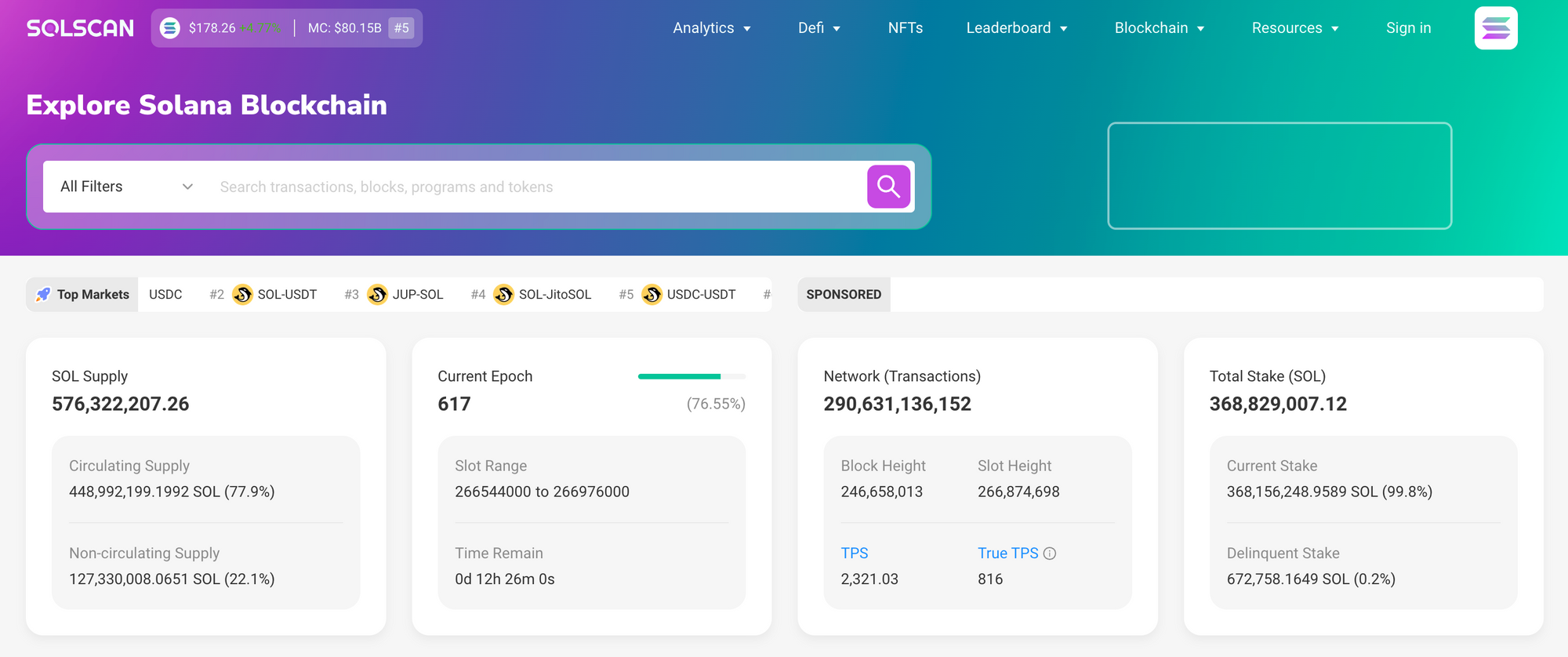
Seriously? Yes — it changed mine. I started using explorers that expose token holders, token supply charts, and direct instruction decoding, and my approach shifted from reactive to proactive. The first time I tracked a suspicious transfer chain back to a cold wallet and traced the outgoing path through a DEX, I realized how powerful transaction-level context can be. At that moment I bookmarked a few pages and one of those bookmarks was solscan, because it tied together token tracking, NFT provenance, and a clean, fast interface without making me feel like I was extracting teeth.
Here’s what bugs me about some explorers: they prioritize aesthetics over actionable data. That looks nice on a blog post, but when I’m trying to detect a front-run, time matters. You want decoded instructions, clear program names, and a quick way to see which wallets hold most of a supply. Something felt off about many dashboards — they simplified too much and obfuscated the edge cases that matter. I’m not saying every feature set matters to everyone, but for traders and power collectors, the nuance is essential.
My instinct said focus on token holders first. So I did. I began by filtering holders by balance change, then by frequency of outgoing transfers, and finally by cross-referencing mint receipts. This stepwise approach often revealed clusters of coordinated movement that wouldn’t show up on simple balance charts. On one occasion I traced an airdrop back to a seed wallet and then found a chain of secondary wallets created to obfuscate provenance — messy, but telling.
There’s also the difference between token trackers and NFT trackers, and that matters a lot. Token trackers need robust supply and holder analytics, plus price feeds and DEX routing clarity. NFT trackers need metadata resolution, image previews, collection grouping, and rarity insights. Many users mix both needs — collectors who trade fractionalized tokens, or projects that mint tokens alongside art — and a single platform that does both well reduces cognitive overhead.
Hmm… tangents are fun, but pragmatic advice helps more. If you’re choosing a tracker, ask these quick questions: Can it decode instructions? Can it show token holder distribution at-a-glance? Can it surface contracts interacting with a given token? If the answer is no to any, you might be flying blind. On the flip side, if the tool gives you program-level traces and historical holder snapshots, you can build hypotheses and test them quickly.
A common mistake is trusting aggregated metrics without context. Volume spikes can be wash trading. Low holder count can be an honest early-stage project or a centralized treasury waiting to dump. So treat dashboards as hypothesis starters, not as verdicts. Initially I thought charts told the whole story, but then I realized charts without traceability are misleading. The better explorers show transaction lineage so you can reconstruct intent when needed.
I’ll be honest: I still cross-check things manually sometimes. I’m not 100% comfortable handing over blind trust to any single platform. But many of the Solana-native explorers reduce the need for that manual triangulation. They index program accounts in ways that reveal mint authorities, freeze authorities, and other knobs projects can pull. Those are the knobs that matter if you’re assessing risk for a mint or secondary purchase.
Common Questions from Collectors and Traders
How do I spot a risky NFT mint?
Look at the mint authority and the holder distribution right after mint. Check whether the metadata URI points to decentralized storage or a mutable web host. Scan the initial funding flow; if most of the supply routes through a handful of wallets, that’s a concentration risk. Also check for program upgrades or freeze privileges, because those can be used to change behavior later.
When should I use an on-chain tracker versus an off-chain aggregator?
Use on-chain trackers when you need provenance, instruction decoding, or to verify supply changes. Use aggregators for high-level market metrics and price discovery. On-chain data gives you the raw facts; aggregators interpret and summarize, which is useful but can miss nuance. Both have roles — combine them for the best view.
I’m biased toward tools that make complex on-chain relationships visible without burying them in menus. (Oh, and by the way…) if you operate in the US market or compare activity across timezones, speed and clarity become even more valuable. My working cadence now: scan holder distributions in the morning, monitor suspicious transfers midday, and deep-dive on anomalies on slower afternoons. It isn’t perfect, but it keeps surprises manageable.
Something else — community context matters. A spike in activity could be a coordinated marketing push out of NYC or a regional collector meetup triggering buys. On one occasion a sudden token swirl corresponded with a podcast drop; the on-chain movement was obvious once I correlated timestamps. So don’t ignore real-world signals; they often explain on-chain noise.
Finally, remember that no tool is a substitute for judgment. Trackers help you see; they don’t make decisions for you. Use them to form hypotheses, test those quickly, and adjust. My approach evolved from panic-driven reflexes to a calmer, data-informed routine. That shift felt good. It still feels good. And yes — I’m still learning. There’s always another quirk to find, another wallet trail to follow, another somethin’ unexpected around the corner…
