Event Date(s):
Event Location:
Okay, so check this out—I’ve been wrestling with multi‑chain wallets for years. Wow! The choices felt endless, and honestly, somethin’ about every install flow used to bug me. My instinct said there had to be a cleaner way to manage assets across chains without accidentally signing garbage transactions. Initially I thought extensions were all the same, but over a weekend of testing I noticed small differences that added up into real security and UX wins. On one hand it’s just software; on the other, it’s where your funds live, so you treat it like your front door.
Really? Yes. If you care about batch transactions, EVM compatibility, or simulating what a contract call will actually do, the right extension saves time and prevents heartache. I’ll be blunt: I’m biased toward tools that give you more visibility into what you’re about to sign. That led me to try a wallet that focuses on transaction simulation and multi‑chain clarity. Here’s the thing. After fiddling with multiple wallets, the one I kept coming back to was rabby. It has a compact footprint and a surprisingly readable permission model, and that changed my workflow—slowly but surely.
Step one is always trust. Seriously? Yep. You shouldn’t just click “Add to browser” and assume everything’s fine. Trust is a combination of code audits, community signals, and your own sense of whether the interface nudges you toward safe behavior. When I first installed it, I looked for obvious red flags: excessive permissions, strange network defaults, or requests to connect when no app context existed. None of those were present, which is not a guarantee, but it’s a good start.
How I Download and Install Rabby Safely
Alright—practical steps. First, go to the official source. For the extension, use the verified page and avoid random clones or third‑party mirrors; I use this page as my landing spot: rabby. Short sentence. Then, pick your browser: Rabby supports Chromium‑based browsers, Brave, and similar variants, so you can keep a separate profile for crypto if you like. Medium length thought. Create a new browser profile for crypto activity if you don’t want cross‑site leakage or accidental wallet connections when casually browsing.
Next: click the install button, accept the permissions it actually needs, and pause. Wait a beat. My rule is simple—if an extension asks for “Read and change all your data on the websites you visit” and you can’t see why, that’s a sign to slow down. Some permissions are unavoidable; some are legitimate for wallet interactions. If you see unexpected persistent background behavior, remove it and re‑evaluate. On installation, the extension will prompt to create a new wallet or import an existing seed phrase. If you import, be extra careful about where your seed came from. If you create a new wallet, write down the phrase offline, not in Google Docs. I’m not preaching here—just saying what I do.
Now, set a strong password. Short aside—use a password manager. Really helpful. After that, enable extra protections: lock the extension when the browser closes, and, if available, enable hardware wallet integrations. Rabby supports connecting hardware devices for signing, which reduces phishing risk significantly. Also, toggle notifications so you don’t get an avalanche of popups for background activity; you’ll thank me later.
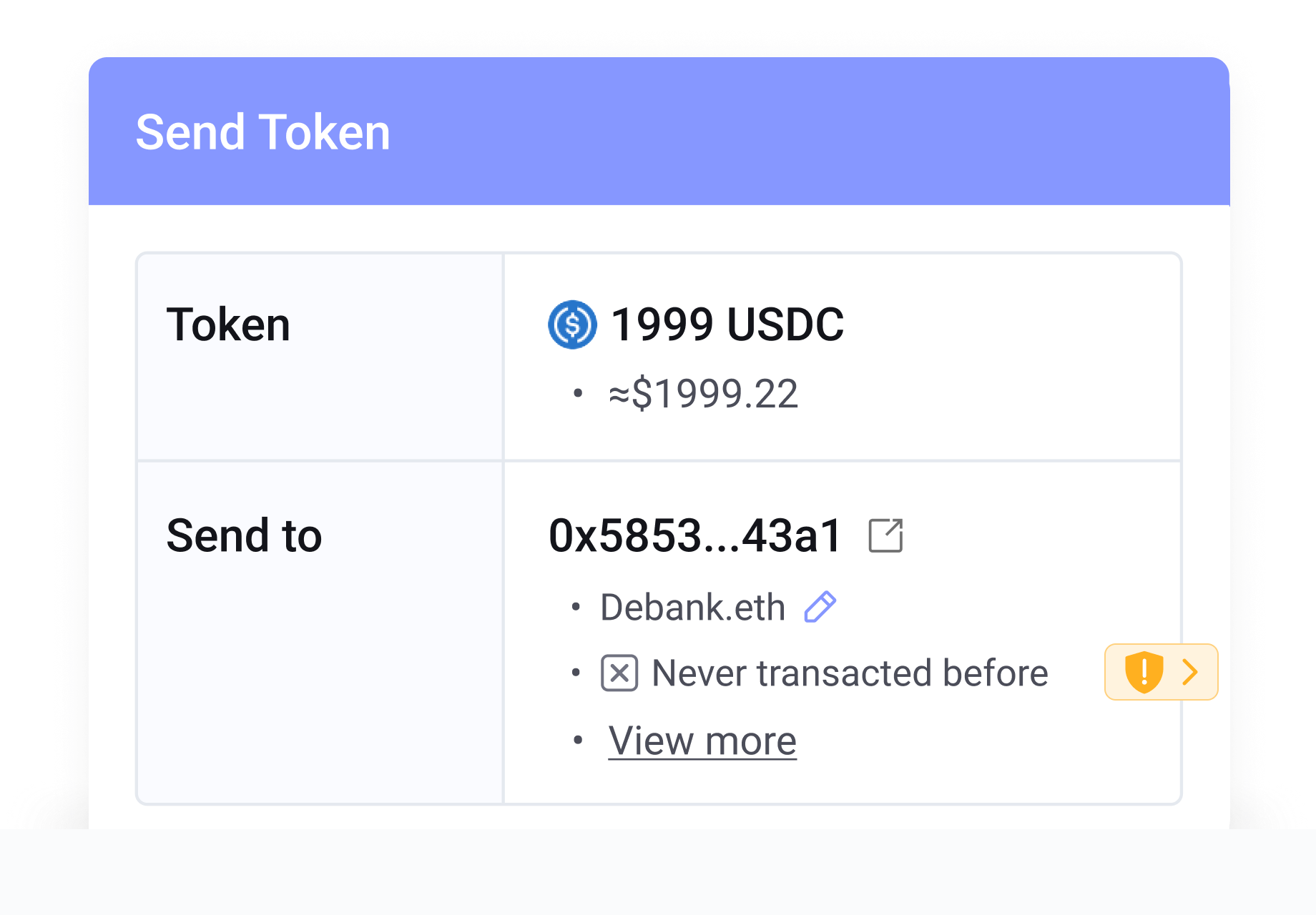
Onboarding tip: go through the demo flows if the wallet offers them. Rabby surfaces transaction simulation right in the confirm modal, so you can preview what the blockchain sees. That preview is a game changer. I started ignoring it at first, though actually, wait—let me rephrase that—at first it seemed like an optional extra, but once I used it to catch a malicious allowance request, I stopped skipping it. That’s the moment I felt the tool actually earned my trust.
Speaking of allowances, here’s a quick habit: for ERC‑20 approvals, set allowances to minimal and revoke them when no longer needed. Use contract‑level approvals only when you have to. On some platforms you cannot avoid a one‑click mega allowance, but many dApps now support “permit” flows or limited approvals, and Rabby’s UI helps you spot those differences before you sign. That alone saves you from many common sandwich attacks and rogue approvals.
One more install nuance: check network defaults. Some wallets auto‑add testnets or weird RPC endpoints after you visit certain sites. Keep your RPC list curated. Add the chains you use and remove the rest. If you rely on public endpoints, consider running or using a reputable RPC provider to avoid man‑in‑the‑middle surprises. My setup uses a paid RPC for mainnet traffic and a separate public node for side experiments; it’s arguably overkill for casual users, but it’s how I avoid weird latency issues when simulating transactions.
Features I Actually Use (and Why)
Transaction simulation: love this. It tells you the gas estimate, whether a tx will revert, and sometimes shows the final token balance deltas. Medium sentence again. This prevents accidentally signing transactions that fail or do something unexpected, which I used to do often—ugh, rookie error. On a couple of occasions a simulated call showed a different token ordering than the dApp UI implied, and I caught it before hitting confirm. That saved me a few swaps worth of fees and a lot of annoyance.
Multi‑chain handling: pretty clean. You can switch chains without going through a noisy connect‑and‑disconnect ritual, and Rabby keeps track of which dApps asked for which permissions on each chain. Longer thought: that means if you connect the same dApp on both Ethereum and an L2, you can manage those connections granularly instead of clobbering them all at once, which feels like grown‑up wallet hygiene.
Hardware integration: game changer. If you have a Ledger or similar, use it. Seriously? Yes. Hardware signatures keep your seed offline and drastically reduce phishing risk. Rabby’s integration requires a bit of setup—granting USB access, confirming device on each tx—but the extra clicks are worth it. I pair mine with the extension for everyday checks and sign high‑value ops on the ledger itself.
Gas control and batching: useful for power users. If you’re moving assets across chains or doing multi‑step DeFi strategies, batching and precise gas controls shave costs. Longer sentence with a subordinate clause: when you can precompute and simulate a batch, and then sign it knowing the final state will be acceptable, you cut down on failed transactions that otherwise eat ETH or gas tokens for nothing.
Privacy features: limited, but present. The wallet doesn’t try to index your browsing, and it lets you manage connected sites. I’m not 100% sure about every telemetry hop, but the visible settings and community audits give me confidence. Also, remember to use separate browser profiles for different identities—one for yield farming, one for casual NFTs, and one for read‑only research.
Troubleshooting and Common Pitfalls
Connection issues? Restart your browser profile. Simple. If that fails, check for conflicting extensions like other wallets that inject similar web3 providers; they compete. Medium thought. Disable the others temporarily. If a dApp can’t detect Rabby, try manual network configuration in the extension or reset the site’s connection from the wallet’s connected sites list.
Accidental approvals: revoke them. Use the wallet’s revoke feature or a trusted revoke dApp, but verify the transaction via simulation. This is very very important. Don’t just hit revoke blind—some revokes are trickier than they look, and simulation reduces surprises. If you’re uncertain, move the assets to a hardware‑protected account and deprecate the hot account.
Seed phrase mishaps: never store it online. Ever. Also, consider using subaccounts or derived accounts so you can rotate or retire an address without moving all funds constantly. That said, I still keep a small hot balance and the rest in deeper cold storage—call it conservative, but it works for me.
FAQ
Can I use Rabby on multiple browsers?
Yes. Install the extension on each browser profile you want, but treat each install as an independent key store unless you import the same seed across them. I prefer one primary browser profile plus a read‑only setup elsewhere.
Is transaction simulation foolproof?
No. Simulations are probabilistic; they depend on the RPC and the state at the time of simulation. Use them as a guardrail, not an absolute guarantee. If gas spikes or front‑runs happen, a simulated success might still fail in practice, though simulation reduces that risk.
What if I suspect a phishing page?
Disconnect immediately, revoke approvals later, and if you signed anything suspect, move funds to a clean wallet. Use hardware signing for high‑value moves and keep an eye on the community channels for reported scams.
Final thought—I’m picky about tooling, and Rabby stuck because it nudges safer behavior without being annoying. Hmm… it still surprises me how small UI choices can drastically reduce dumb mistakes. So try it in a sandbox profile first, test with tiny amounts, and scale up as you grow comfortable. You’ll thank yourself later—really.
